
Learn More About Nuisance Birds
Need to identify the species of your unwelcome visitor? Learn more about the specific types of nuisance birds in our bird pest library.
Bird Pest Library Menu:
> Pigeons
> Crows
> Cowbirds
> Starlings
> House Sparrows
> Woodpeckers
> Swallows
> Grackles
Pigeons and Rock Doves
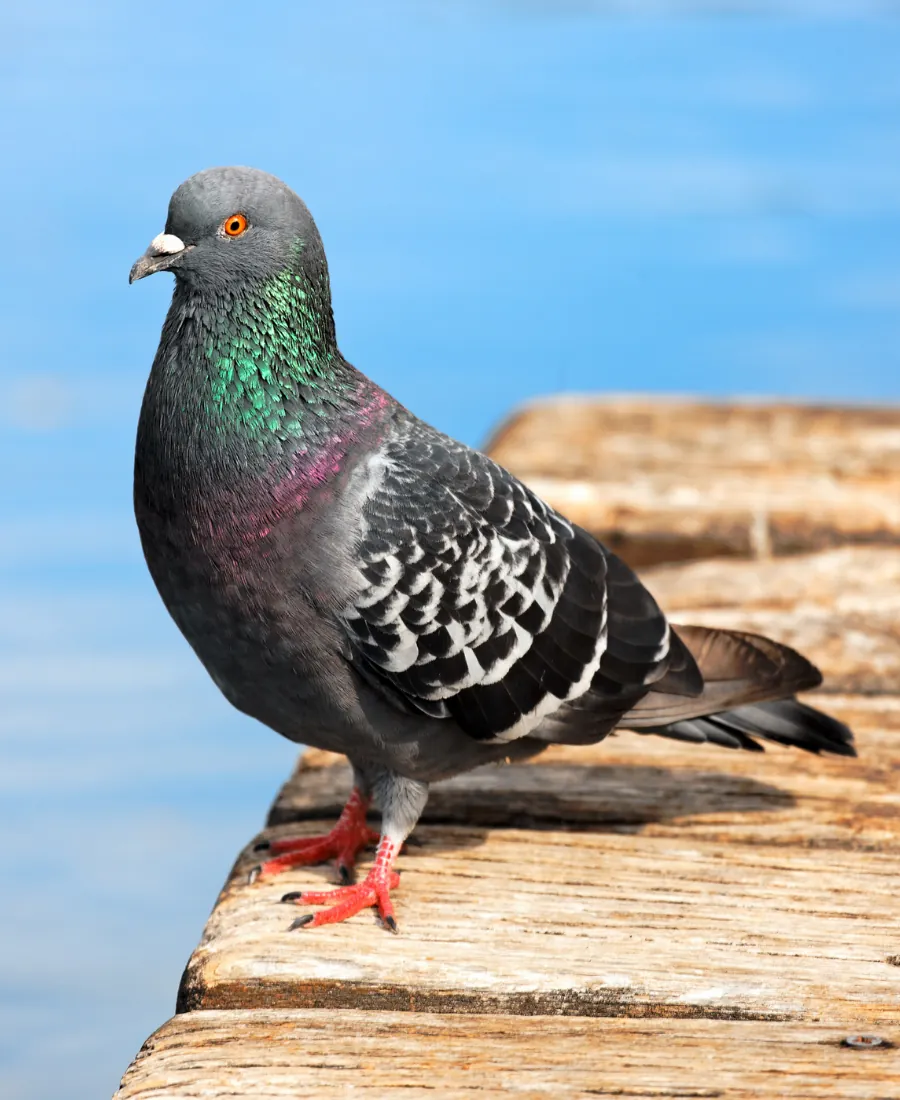
The pigeon was introduced to the United States as a domesticated bird from the European Rock Dove. Many of the birds escaped and began forming into wild populations. Today, the pigeon is the most severe bird pest to the human population.
Behavior:
- Pigeons stick together in large cities and may be seen congregating in flocks of hundreds on tall buildings. Smaller groups will take over a roof or two of a home, ledges, lofts, attics, drain spouts, and caves.
- These birds do not construct a nest as other birds would. Instead, they gather twigs, sticks, and grasses and clump them together to form a platform like nest.
- Feed on garbage, grain, and any other source of food that people may or may not intend to give them.
- Pigeons are monogamous- they have one mate for life. The male will care for and guard the female and the nest. Young will hatch 18 days later and will leave the nest at 4-6 weeks of age.
Identifying Characteristics:
Typically, pigeons have grayish to black bodies with a whitish behind, two distinguishing black bands on the wings, and a broad black band on the tail. The head is usually a darker gray color with greenish-purple metallic coloring. A pigeon can weigh as much as 13 oz. and average length is 11 inches. The only bird that the pigeon can be confused with is the mourning dove, but the main distinguishing features is the tail; the mourning dove has a pointed tail, and the pigeon has a fanned tail.
Crows
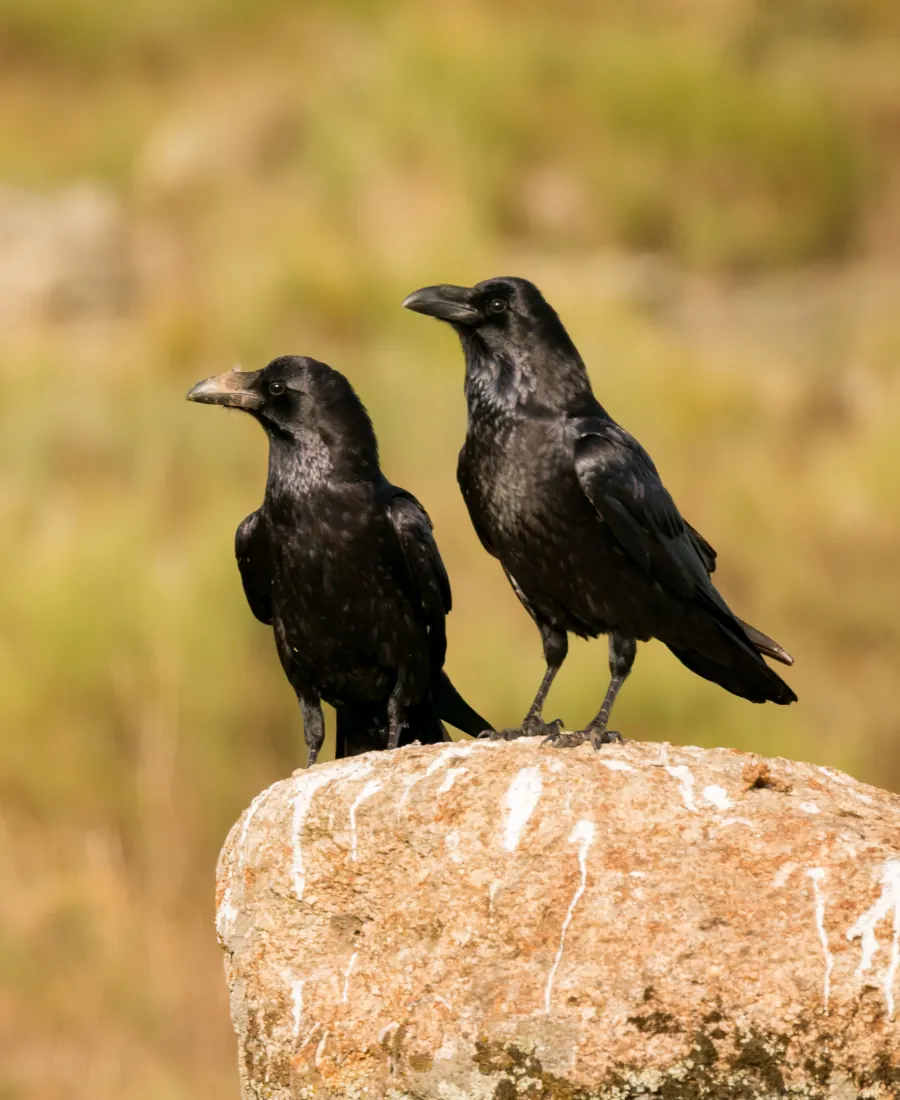
Crows are familiar birds found across the continent. They commonly appear in treetops, roadsides, fields, town centers, and even beaches. Notably, crows are among the most frequent victims of West Nile Virus and typically die within a week of contracting it.
Behavior:
- Crows are highly social birds and rarely travel alone. In winter, they gather in large groups and have been known to return to the same area for well over 100 years — creating significant mess problems in urban neighborhoods.
- Crows eat almost anything: insects, earthworms, garbage, pet food, roadkill, small turtles, fish, and clams. As omnivores, they also consume small nestlings from species such as sparrows, chickens, jays, robins, and loons.
- Female and male crows build nests together and hide them near the base of a tree trunk. They construct nests from twigs, pine needles, weeds, and soft bark, resulting in large structures approximately 6 to 20 inches across and 4 to 16 inches deep. Eggs are grayish blue with small spots of grey and brown.
- Young crows do not begin mating until they reach 2 to 4 years of age. In many cases, these birds cooperate to help raise younger crows within their group — a family unit that may include up to 15 birds across 5 different nests.
Identifying Characteristics:
- Crows produce a deep, raspy cawing call that makes them easy to identify by sound alone.
- They are large, black, intelligent birds with long black legs and a thick dark bill. During molting, they can appear grey as new shiny black feathers grow in.
- Crows measure 16 to 21 inches in length with a wingspan of 34 to 40 inches and weigh up to 22 ounces — nearly the size of a raven.
Cowbirds
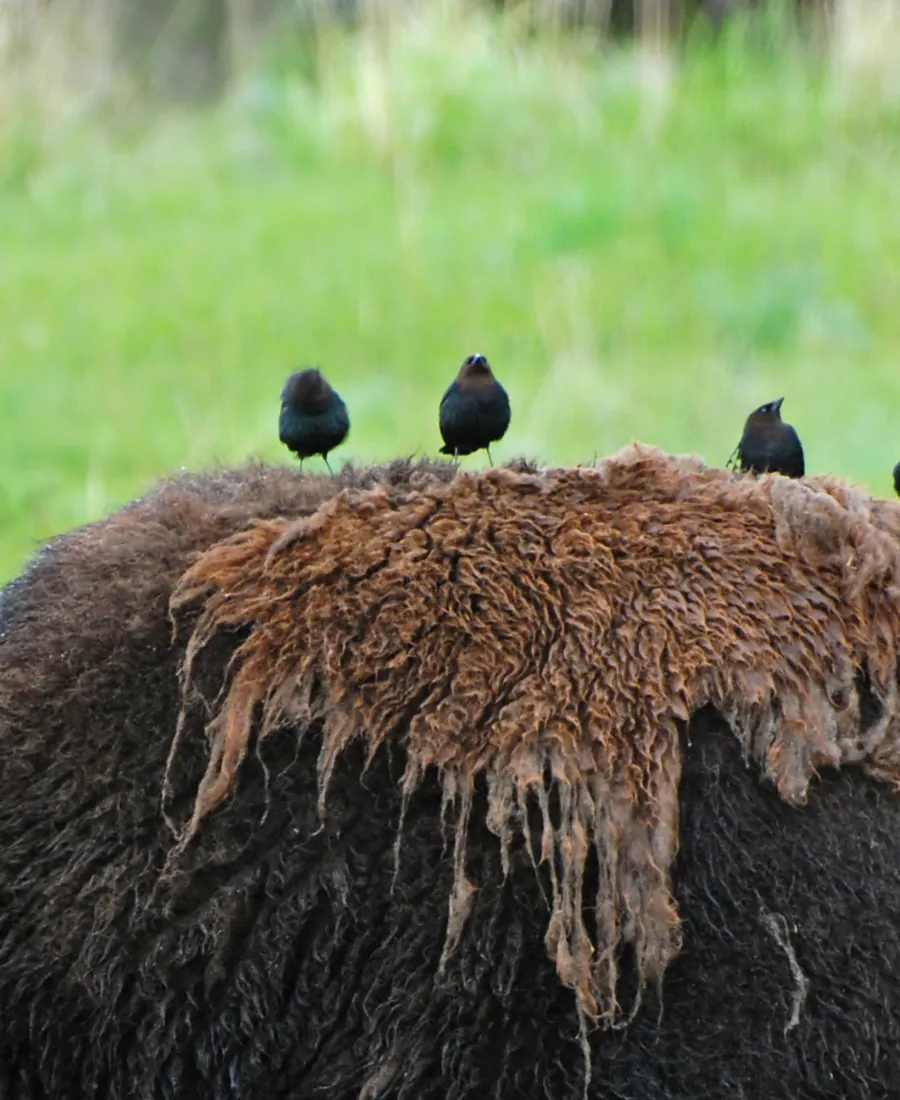
Since the 1800s, cowbirds have earned their name by following bison across grasslands, catching the insects bison kicked up as they roamed. Today, cowbirds follow cattle in the same way.
Fun Fact: A group of cowbirds is not called a flock — it is called a herd.
Behavior:
- Cowbirds are North America's most common nest parasite. Rather than building their own nests, they lay their eggs in the nests of other small bird species and leave those birds to raise their young. Cowbirds lay eggs in more than 220 different species' nests.
- Some birds recognize the difference in eggs and respond by ejecting the cowbird eggs, building a new nest over them, or puncturing and discarding them. However, many species do not detect the difference and raise the cowbird young as their own.
- Because cowbirds rely on nest parasitism, researchers find it difficult to assess their social structure. They are not monogamous — females mate with multiple partners in a single season.
Identifying Characteristics:
- Males are small, shiny black birds with a dull brown head. Females are smaller than males and are solid brown with a whitish throat.
- Male: 7.5 to 8.7 inches in length, weighing 1 to 2 oz, with a wingspan of 14.2 inches.
- Female: 6 to 7.9 inches in length, weighing 1.3 to 1.6 oz, with a wingspan of 12.6 to 15 inches.
Starlings
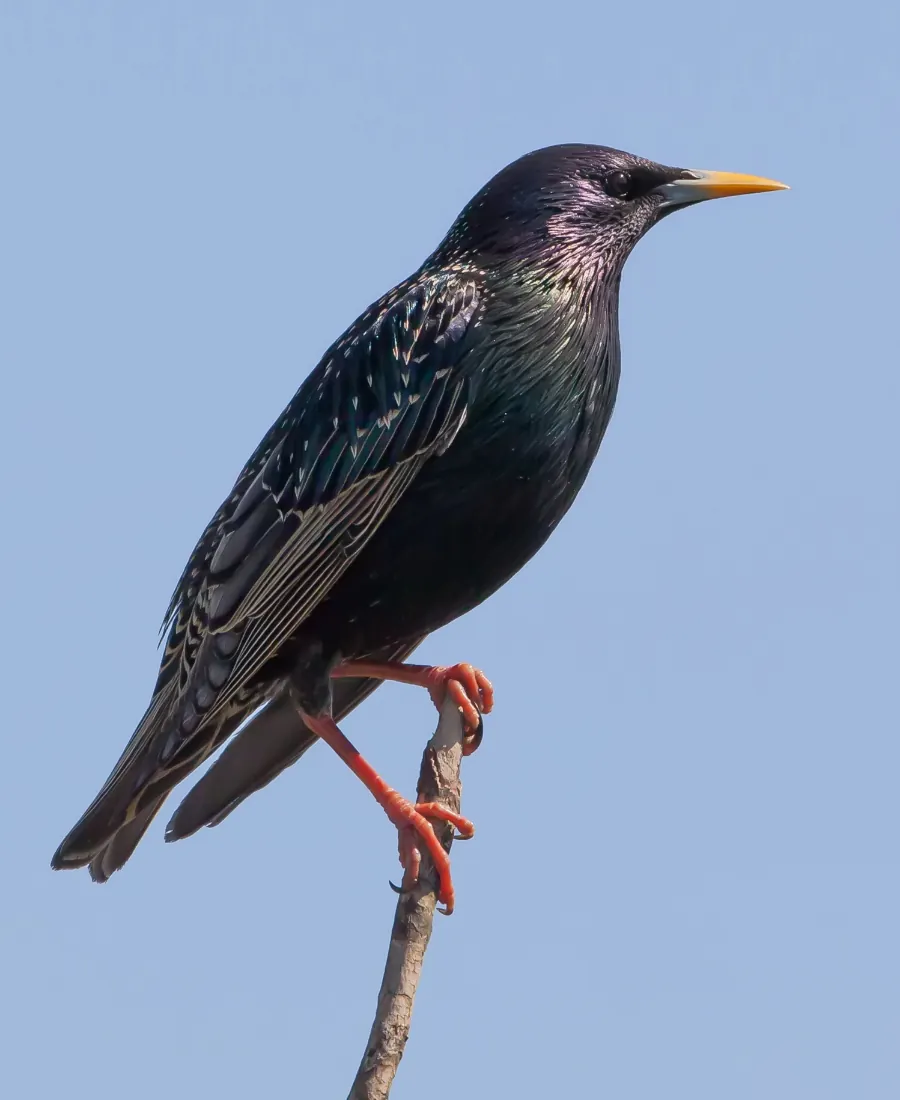
Starlings originated in Europe and arrived in the United States when an individual released them in New York City in the early 1890s — part of an effort to introduce every bird mentioned in Shakespeare's works to North America. Today, starlings number approximately 140 million across the country.
Behavior:
- Like pigeons and sparrows, starlings travel in flocks. They nest in tree cavities and on ledges in rural areas.
- In grain fields, cornfields, and livestock feedlots, starlings gather in flocks numbering in the hundreds and thousands, making them a significant agricultural pest.
- In cities, starlings roost in apartment buildings and parks. During winter, they flock to lighted signs and large buildings to stay warm.
- Because of their sheer numbers, starlings produce enough droppings to severely damage or even kill trees over time.
- Starlings mate in spring. Females lay 4 to 7 eggs that hatch approximately 13 days later. Young starlings leave the nest at 21 days old, and females may produce two broods per season.
Identifying Characteristics: Starlings are roughly the size of a robin — stocky with short tails. Many people confuse them with blackbirds. However, the key difference is that starlings display greenish-purple metallic feathers across their body. Both males and females have a yellow beak during mating season, while at other times the beak turns a dull, dark color.
House Sparrow
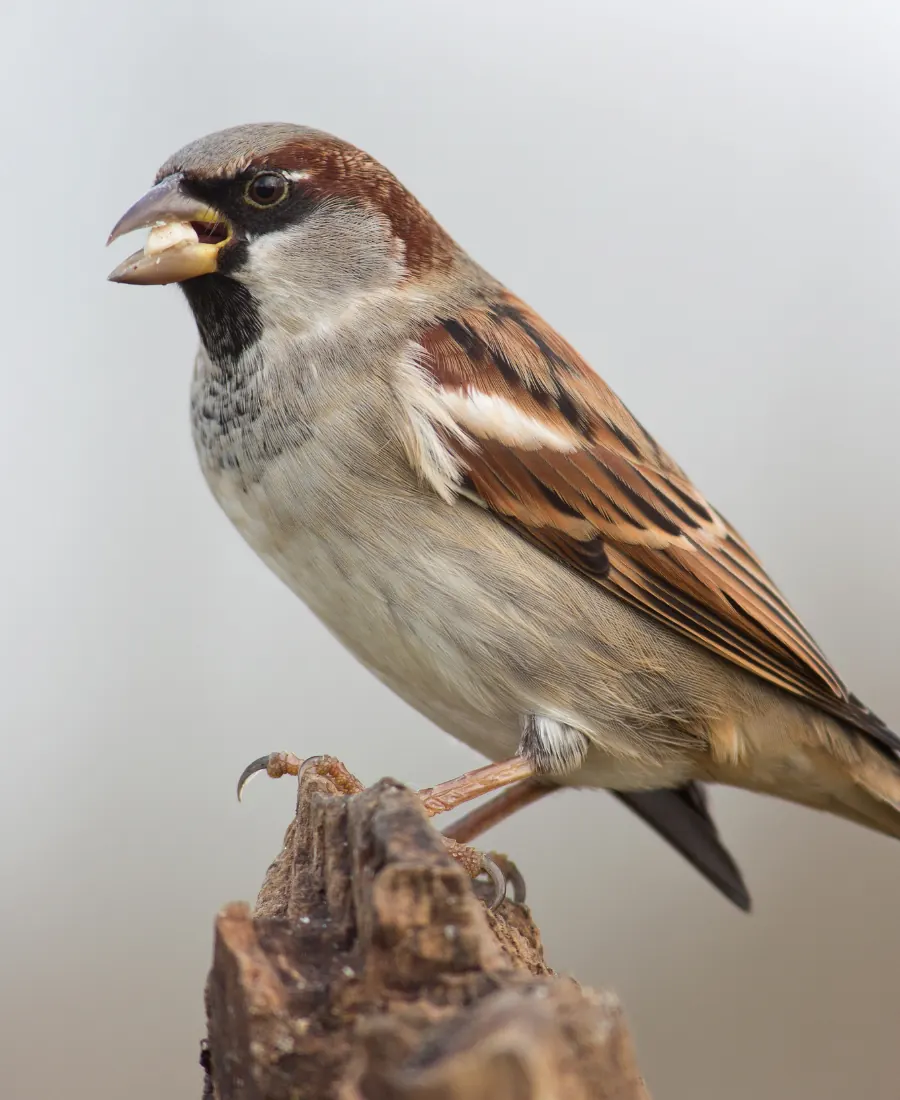
House sparrows have lived alongside humans for centuries. In the 1850s, they were introduced in New York, and today they appear everywhere across North America — with the exception of Alaska and northern Canada.
Behavior:
- House sparrows depend on human activity. In rural dry areas, they survive only near people. In other environments, they thrive in farms, cities, and suburbs — though they avoid woodlands and grasslands entirely.
- Sparrows nest in holes in buildings, stuffing whatever materials they can find until the opening is nearly filled. They also nest in streetlamps, traffic lights, and gas station roofs, creating messes with droppings and nesting debris.
- House sparrows are aggressive nesters and frequently take over nests belonging to other bird species.
- Females lay up to 8 eggs at a time, and eggs hatch in approximately 14 days.
- Sparrows are highly social and often feed alongside other birds. At feeders, they eat breadcrumbs, and on farms they consume chicken feed, corn, grains, and seeds.
Identifying Characteristics:
- House sparrows grow to 5 to 7 inches in length and weigh approximately 1 oz, with a wingspan reaching up to 10 inches.
- They are similar in size to a song sparrow but stockier than most of their species.
- Males are more colorful than females and display a black patch along the throat. Females are grayish brown and appear more worn or rough in comparison.
Woodpeckers
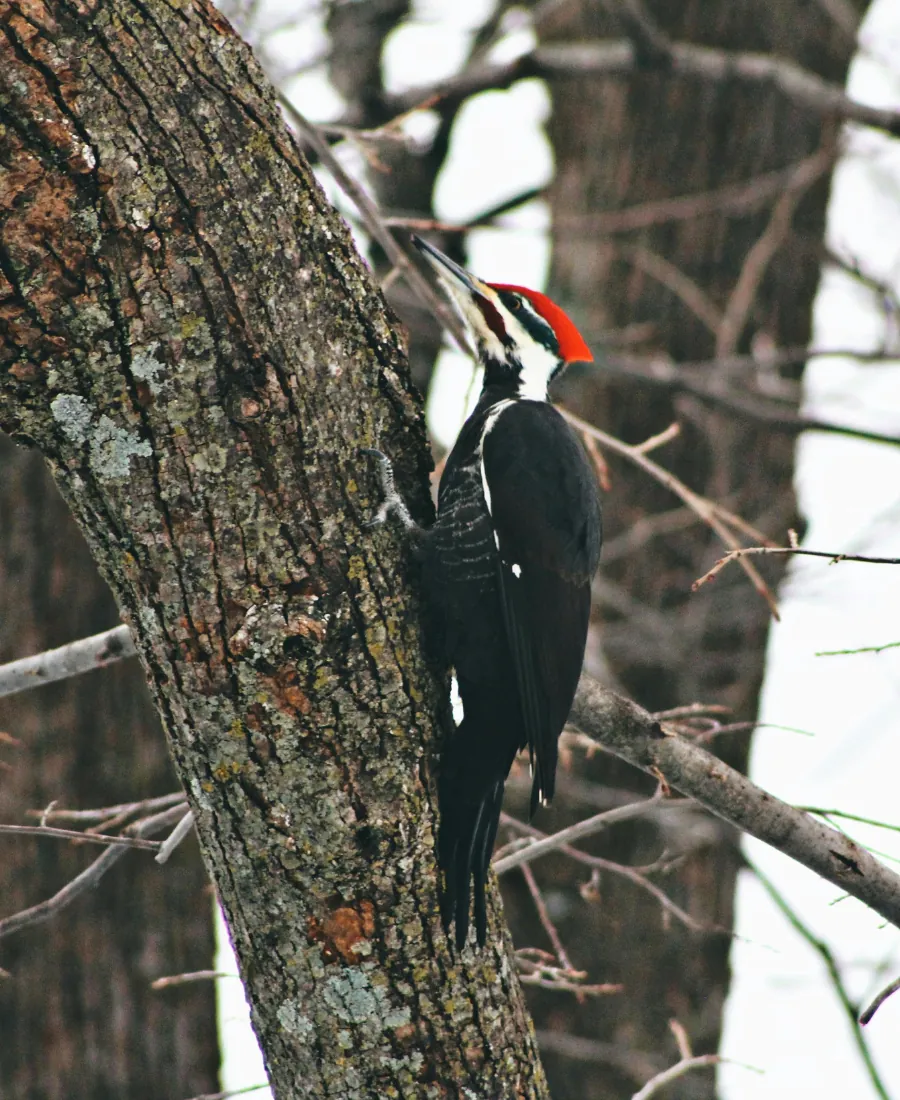
Approximately 22 species of woodpeckers live in the United States. The Arizona woodpecker specifically inhabits the mountains of New Mexico and Arizona, favoring oak, sycamore, and other woodland areas in canyon environments.
Behavior:
- Woodpeckers are monogamous and mate for life. Females lay 3 to 4 eggs in nests made of woodchips, positioned 9 to 50 feet above the ground. Both parents incubate the eggs until they hatch approximately 14 days later.
- Most woodpeckers eat insects, nuts, seeds, vegetable matter, native berries, and tree sap.
- In areas where trees are scarce, woodpeckers seek shelter in man-made structures such as fences, utility poles, and wood buildings — making them a common nuisance in developed areas.
Identifying Characteristics:
- Different woodpecker species produce different calls. Most, however, use a rhythmic drumming sequence to establish territory and attract a mate.
- The Arizona woodpecker is small with a brown body and a white-spotted belly. The face is white with a brown cheek patch. Males display a small red patch on the head, while females do not.
Swallows
Approximately 8 species of swallows commonly appear in the United States. Swallows are widespread across North America and frequently appear near open fields, bodies of water, agricultural areas, and residential structures. They prefer environments that offer open airspace for feeding and stable surfaces for nesting.
Behavior:
- Swallows are generally monogamous during the breeding season. Females typically lay 3 to 6 eggs per clutch. Both parents incubate the eggs, which hatch in approximately 14 to 18 days.
- Swallows build nests on man-made structures such as eaves, barns, bridges, and sheds, using mud, grass, and plant fibers as construction materials.
- Swallows feed almost exclusively on flying insects — including mosquitoes, flies, beetles, and gnats — making them effective natural insect controllers.
- These birds are highly social and frequently nest in colonies. Their attraction to buildings stems from the stable surfaces available for nest attachment and the protection those structures provide from predators and weather.
Identifying Characteristics:
- Swallows are small to medium-sized birds with streamlined bodies, long pointed wings, and forked or slightly notched tails built for agile flight.
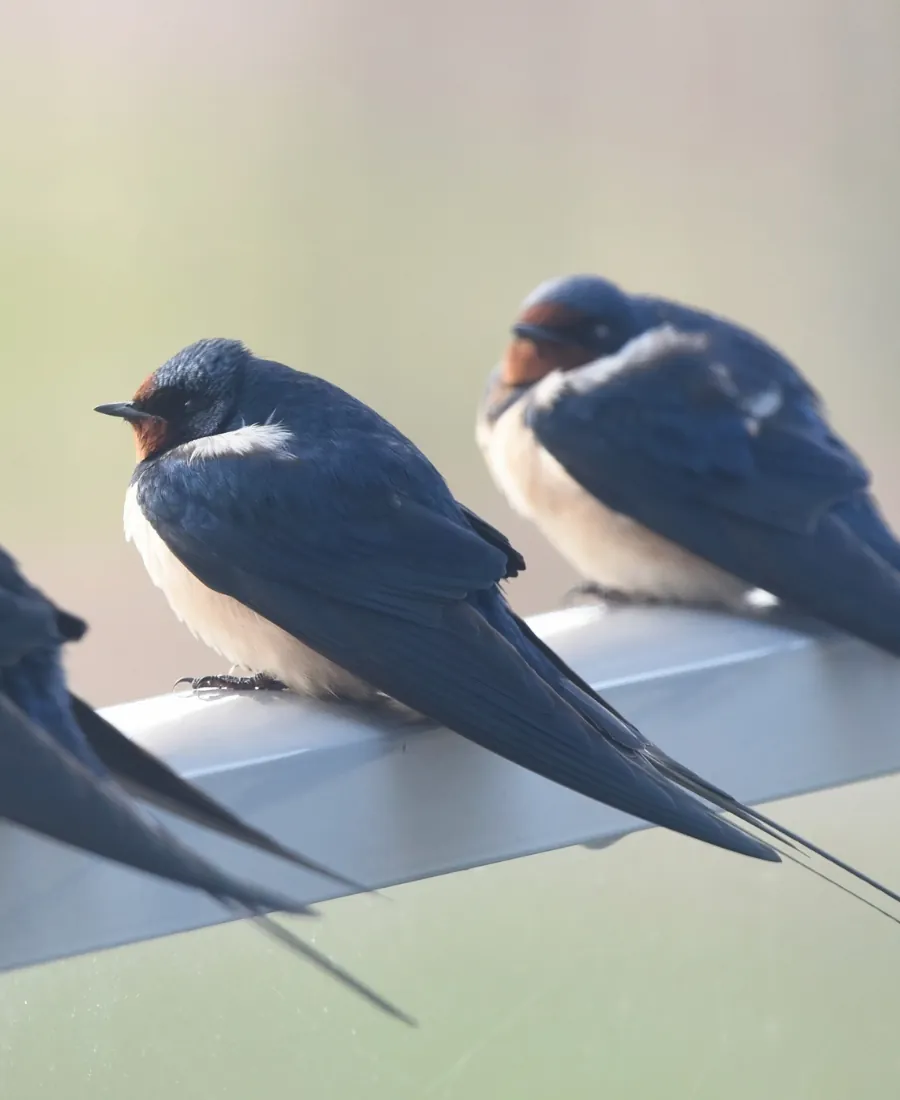
- Plumage varies by species but commonly includes shades of blue, brown, white, and rust, with lighter underbellies and darker backs.
- The easiest way to identify swallows in the field is by their fast, acrobatic flight — continuous swooping movements as they chase insects through the air.
Grackles
Three common species of grackles appear throughout the United States. Grackles adapt well to urban, suburban, and agricultural environments and commonly appear in open fields, parks, parking lots, farmlands, and residential neighborhoods — particularly near food sources.
Behavior:
- Grackles are social birds that form large flocks, especially outside the breeding season. Females lay 4 to 7 eggs per clutch in nests built from grasses, twigs, and plant material in trees, shrubs, or on man-made structures. Incubation lasts approximately 12 to 14 days.
- Their diet is highly opportunistic and includes insects, seeds, grains, fruits, small animals, and human food scraps. This flexibility allows grackles to thrive wherever people live and work.
- Grackles roost in large numbers, which frequently leads to noise complaints, droppings accumulation, and damage to property and landscaping.
Identifying Characteristics:
- Grackles are medium to large birds with long legs, long tails, and strong bills.
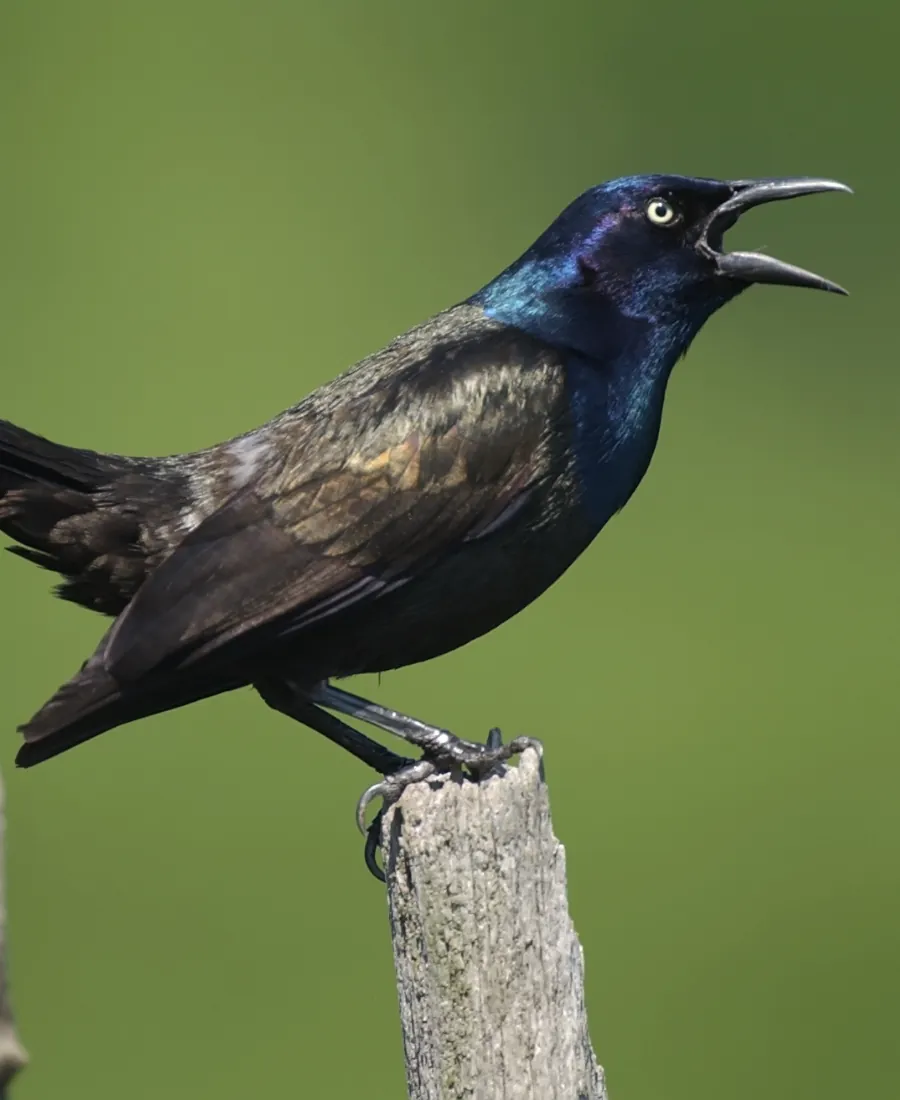
- Their plumage is glossy black with iridescent blue, purple, or bronze tones that become especially noticeable in direct sunlight.
- Males are larger than females and display brighter iridescence. In addition to their appearance, grackles are easy to identify by their loud, harsh calls and their tendency to gather in large, conspicuous flocks.
What Phoenix Customers Are Saying


Atomic Pest Control
